ICEInstant Combat Eradication
No block. No takedown. You react within the first tenth of a second and you end it. ICE is an immediate-reaction protocol, not a martial art.

The threat is not managed. It is removed.
You start from a guard, not from sizing the opponent up. No reading, no measuring: the response fires before conscious decision and does damage in minimal time. It has to, because more and more often the aggressor is not one person but a pack: linger on the first and you are open to the rest.
No competition, no scoring, no rulebook. The context is a real assault: no rounds, no referee.
The sequence does not end in a grip or a hold: it ends when the threat can no longer continue.
Three levels and a branch
Every level has stated entry criteria and closes with an optional assessment, which is the only way on to the next level. The instructor track is not a fourth level: it is a separate branch with its own selection.
- ICE 1
Cold Start
The principles of the method, situational awareness and mat safety standards.
- Length
- 4 hours
- Course
- €40
- Assessment
- €20
The assessment is optional and only needed to move on to the next level. The 4 hours of the course do not grant access to it automatically: if the instructor does not think you are ready, you can repeat the course or train on your own. You can also sit the assessment against their advice, knowing that in that case you will most likely fail.
- Who it is for
- Anyone starting from scratch: no sporting or martial background required.
- Goal
- Build the basic reaction from the guard — detection, entry, closure — and the ability to read a situation before it escalates.
- Prerequisites
- None. Open to all ages, with fitness for physical activity.
- On completion
- Certificate of completion and an assessment of the level reached, which determines access to ICE 2.
- ICE 2
Cold Focus
The same principles applied to more variable contexts, where the situation does not hold still.
- Length
- 4 hours
- Course
- €50
- Assessment
- €20
The assessment is optional and only needed to move on to the next level. The 4 hours of the course do not grant access to it automatically: if the instructor does not think you are ready, you can repeat the course or train on your own. You can also sit the assessment against their advice, knowing that in that case you will most likely fail.
- Who it is for
- Those who completed ICE 1 and want the reaction to hold outside training-room conditions: low light, tight space, a bigger aggressor, surprise, fatigue. In ICE 1 the sequence works because everything is predictable; here it stops being so.
- Goal
- Recognising which principle the moment calls for, and applying it without stopping to choose. Distance, space, number of people and stress level all change: the response is no longer one sequence to repeat but the same logic fitted to what is in front of you. Armed threats with a stationary aggressor are introduced.
- Prerequisites
- ICE 1 assessment passed.
- On completion
- Level 2 certificate and an assessment opening access to ICE 3.
- ICE 3
Zero Point
A check on overall preparation and on maturity in using the method.
- Length
- 4 hours
- Course
- €60
- Assessment
- €20
The assessment is optional and only needed to move on to the next level. The 4 hours of the course do not grant access to it automatically: if the instructor does not think you are ready, you can repeat the course or train on your own. You can also sit the assessment against their advice, knowing that in that case you will most likely fail.
- Who it is for
- Those who completed ICE 1 and ICE 2 and are taking on the advanced level.
- Goal
- Dynamic scenarios and moving armed threats, where the sequence adapts while it runs. The assessment weighs execution, but also the decisions before it: what you read, and what you chose not to do.
- Prerequisites
- ICE 2 assessment passed and documented continuity of practice.
- On completion
- Level 3 certificate: full preparation in the method. It is the technical requirement to apply for the instructor track.
- Instructors
ICE Vector
A separate, selective branch. It is not a level four: it is a different job from the student’s.
- Course
- €400
- Who it is for
- Those who completed ICE 1, 2 and 3 and pass an assessment of fitness to teach.
- Goal
- Train the ICE Vectors: people able to teach the method, run a class safely, apply the standards and represent ICE consistently.
- Prerequisites
- ICE 3 certificate, fitness assessment and interview. Access is by application: technical level is necessary but not sufficient.
- On completion
- The title of ICE Vector, the system’s instructor certification. It holds while it stays active: maintained through periodic refreshers, suspended without them.
Don’t wait to be harmed
ICE does not teach you to seek a confrontation, nor to stand still in the face of risk.
Safety begins with recognising when a situation is turning into a concrete threat. There is no need to wait for harm: the priority is to create distance, look for a way out, call for help and get yourself somewhere safe.
When no safe alternative is left, every action has one purpose only: to stop the danger and get out of the situation.
When the danger stops, the need to act stops with it. ICE is not punishment and not retaliation: it is clarity, responsibility and protecting yourself.
This content is informational and does not constitute legal advice. Techniques are taught in person only, with a certified instructor, in a controlled environment.
In their words
Collected from people who followed the course and agreed to have them published.
One of the best investments you can make, for yourself or for someone you love.
I am the mother of a teenage boy and, given the explosion of violence we are witnessing — and the news we read every day — I turned to Mauro, whom I had come to know through personal self-defense courses in the past, for a personalised self-defense course for my son.
He proposed the new ICE method, which he created. At first I had no idea what it was, but I have to say that now, months later, I am delighted.
It is a personalised course: simple, quick and practical. The lessons are private, the instructor comes to our home at the agreed time and gives our boy his full attention. The discipline and the techniques adapt, and are built around each person’s physique — man, woman or child. Physical strength is not required and it is not a martial art. The instructors are educated, attentive and very well prepared.
We are continuing the course and I believe it is one of the best investments you can make, for yourself or for someone you love. What I would say is that I would recommend it to anyone: for a small investment — very reasonable for a one-to-one service — we protect the future of ourselves and of the people we care about.
Want to try the system?
There are three ways to start. Pick the one you need — or just write, and we will point you to the right format and the next dates.
The form needs JavaScript. Otherwise, write to: info@icesystem.it
Further reading — principles, comparison and instructors
You train the person, not just the movement
A technique can be learnt in an afternoon. Knowing when to use it — and when not to — takes a path. These four references sit underneath every level of the programme.
Preparation
Nobody improvises under stress: you perform what you have trained. That is why the programme is codified, repeatable and progressive, each level built on the one before.
Clarity
Reading a situation, weighing it and deciding to leave is as much a part of the training as the physical response. The best answer is still the one that avoids the confrontation.
Responsibility
Knowing how to respond adds a duty rather than removing one. The legal framework for the use of force is examined material, not a footnote.
Standards
Every level has stated criteria and an assessment. Certifications stay valid only through periodic refreshers: a credential nobody maintains says nothing.
Six rules, zero exceptions
No blocking. Only striking.
Every defensive motion is already an attack. Time spent defending is time handed to the aggressor.
Bone is the weapon
You strike with bone surfaces: structure, not precision. The surface changes with the situation, the principle does not. You don't train the fist, you train the line.
No ground, no grips
No locks, no pins, no control. On the ground you lose time, vision and any chance to leave.
One direction only
Absolute economy: the line goes forward and never comes back. No wind-up, no reset, no second attempt.
Pre-emption, not reaction
You read intent, not the strike. Once the strike is launched you are already two tenths late.
Immediate closure
The sequence is designed to end, not to last. One goal: stop the offensive capability and leave the scene.
Under one second
Indicative reference timings used in training to calibrate the sequence.
Detection
Recognising hostile intent: distance, hands, eyes, context.
Entry
You close the distance while the aggressor is still loading.
Structure
Bone structure works on the opponent's structure: balance and posture collapse.
Closure
Offensive capability is stopped, disengagement is immediate. No control phase.
Where ICE diverges
| Combat sports | Classic self-defense | ICE | |
|---|---|---|---|
| Goal | Win the bout | Control the aggressor | Stop the threat |
| Duration | Minutes, rounds | Seconds | Under one second |
| Ground fighting | Central | Present | Absent |
| Rules | Rulebook and referee | Graduated response | Only legal limits |
| Impact surface | Gloved fist, shin | Palm, elbow | Bone surfaces |
Goal
- ICE
- Stop the threat
- Combat sports
- Win the bout
- Classic self-defense
- Control the aggressor
Duration
- ICE
- Under one second
- Combat sports
- Minutes, rounds
- Classic self-defense
- Seconds
Ground fighting
- ICE
- Absent
- Combat sports
- Central
- Classic self-defense
- Present
Rules
- ICE
- Only legal limits
- Combat sports
- Rulebook and referee
- Classic self-defense
- Graduated response
Impact surface
- ICE
- Bone surfaces
- Combat sports
- Gloved fist, shin
- Classic self-defense
- Palm, elbow
Who may teach ICE
Anyone teaching ICE holds the title of ICE Vector, active only while it is maintained through refreshers. Only the people listed here are authorised to teach: this register is the source to check before joining any course presented as ICE.
- Founder of the system
Mauro Sala
Italy
Becoming an ICE Vector
The track leads to the title of ICE Vector and trains people who will answer for what they teach: teaching methodology, running a class, mat safety, the legal framework for the use of force, and consistency in representing the system. Teaching is a responsibility before it is a title, so selection is by application and does not rest on technical level alone.
Entry requirements
- ICE 1, ICE 2 and ICE 3 certificates completed.
- Assessment of fitness to teach, both technical and dispositional.
- Individual interview with the programme lead.
Staying active
The title of ICE Vector is not permanent. It stays active through periodic refreshers on the method, on safety and on the law; without one it lapses and the name leaves the register.
The track opens in cohorts, with limited places. Applications are collected year-round.
Upcoming sessions
Courses, seminars, assessments and refreshers on the calendar. Places are always limited.
Calendar being finalised
Dates for the next cohort are not public yet. Write in with your level and city to be notified when they are.
Notify me about upcoming dates
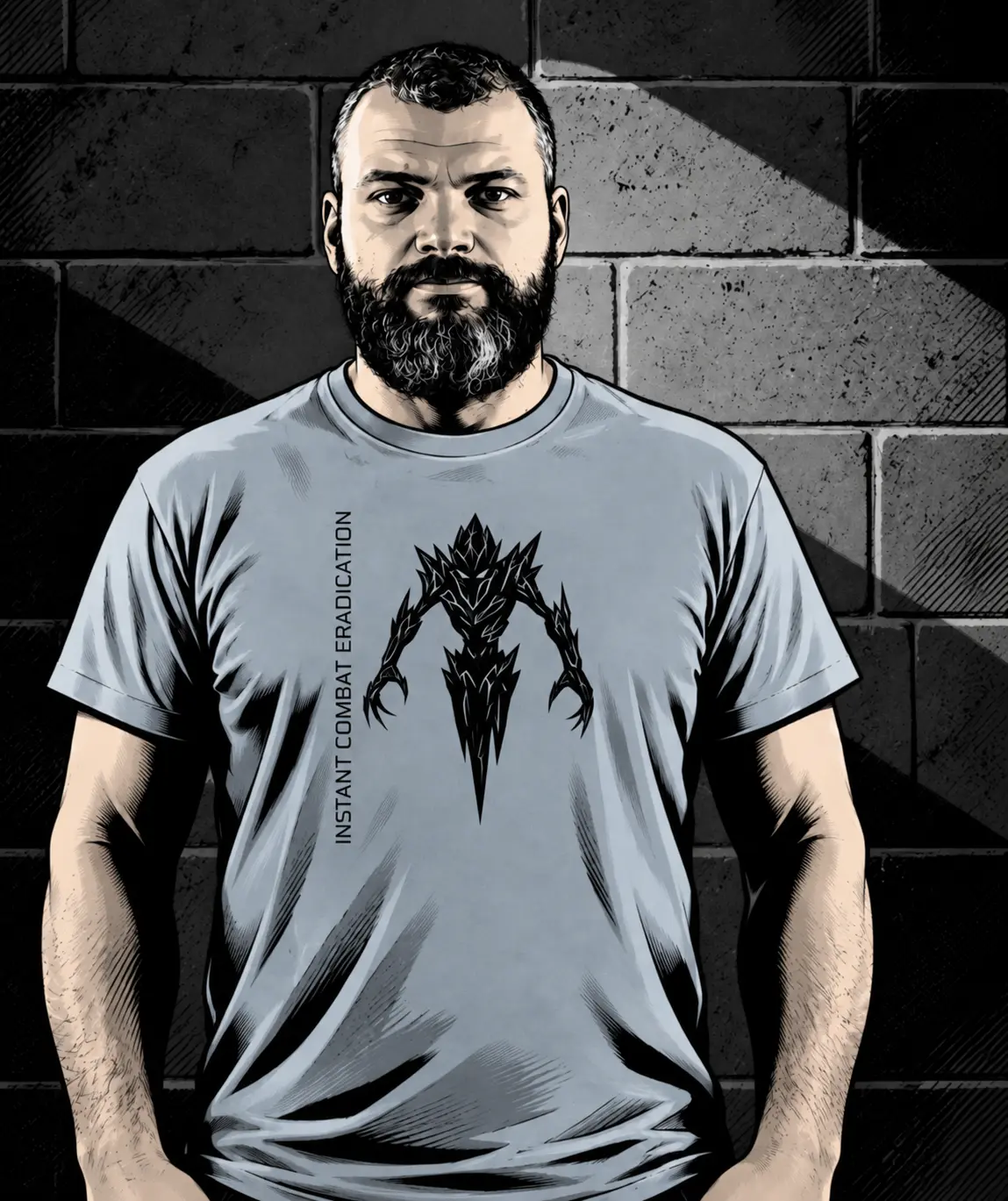
Mauro Sala
Founder of the ICE system
Instructor since 2011. Krav maga instructor, operational shooting instructor, COS/SOG instructor. Field training led to one simple conclusion: in a real assault there is no time for complex technique. ICE is the synthesis of that conclusion.
Why ICE exists
I have watched people leave a course convinced they could respond, after months spent rehearsing movements they would never have had time to begin. That gap between what is taught and what actually happens is why I codified ICE: a few principles, testable under stress, taught to stated criteria and with the responsibility that follows from them.
And assaults have changed. More and more often it is not one against one: it is a pack. Stay locked on the first and you are open to all the others. That is why every response in ICE has to finish in moments and leave you already facing the next threat.